HOW IT WORKS
Start with your work.
Build the connections.
Bring your requirements, existing management system and people together. Establish the scope, define the work and keep the evidence connected as your organization uses the system.
See the capabilities behind the journey. Explore the Helio Atlas platform.
SEE THE CONNECTIONS IN PRACTICE
1 / 4Groundwater monitoring.
Equipment qualification.
Supplier oversight.
Corrective action.
Illustrative examples. Your requirements and work are established for your facility and licensing basis.
FROM GETTING STARTED TO EVERYDAY USE
Build around the way you work.
Explore what each stage establishes, from defined responsibilities to connected records and review.
Agree what the system needs to cover.
Start with your facility, jurisdiction and lifecycle stage. Identify the requirements and commitments that belong in scope, along with the teams and work they affect.
- Confirm the applicable sources and editions
- Identify existing content and coverage gaps
- Agree ownership and the first area to establish
You establish: A shared scope and a clear starting point.
A groundwater monitoring obligation is identified in the facility’s applicable licensing or environmental basis.

Structure the system
Organize controlled content into a consistent hierarchy. Keep useful material from your existing management system and make the relationships between direction, processes and actions explicit.
- Organize policy, program, process, activity and step content
- Map requirements to the work that addresses them
- Review the structure with the people who own it
You establish: A management system people can navigate and maintain.
Environmental Protection Policy → Environmental Protection Program → Groundwater Monitoring → Routine Sampling → Collect groundwater samples.
Define responsibilities
Assign the roles that perform and review each work step. Connect those roles to positions and people so ownership is clear alongside the completion criteria and required records.
- Define the responsible role for each work step
- Connect roles to positions and assigned people
- Identify reviewers, completion criteria and required records
You establish: Defined work with clear ownership and expectations.
Jordan Lee, Field Sampling Technician, performs the sampling step as Environmental Technician. Alex Morgan reviews the work as Environmental Lead.
Records & Evidence
As work is performed, associate the completed records with the relevant step and requirement. Preserve the context that makes the record useful to the next person.
- Use the controlled instructions and required artifacts
- Link completed records or evidence references
- Retain the relationship to the step and requirement
You establish: Records that help explain what was done and why.
The approved EQ-204 qualification test report is linked to the testing step, equipment performance requirement and controlled source template.
Compliance & Assurance
Review whether requirements are addressed and whether the work follows the defined instructions. Record findings, assign corrective actions and verify the response.
- Assess the defined system and supporting evidence
- Assign findings and actions to accountable roles
- Verify the response and revise controlled content where needed
You establish: A repeatable review cycle with traceable follow-through.
The overview highlights supplier audit follow-up and qualification evidence review. Reviewers can follow the underlying actions, supporting records and verification status.
A PRACTICAL STARTING POINT
Start with what
you already have.
An existing management system is a starting point. Review what is useful, identify the gaps and agree how it should be organized before expanding coverage.
Applicable requirements, current policies and procedures, facility knowledge, existing records and the people who own the work.
Agree scope and priorities, organize content, define responsibilities and review the connections before putting the selected area into use.
Use the agreed structure to bring additional areas, teams or lifecycle stages into scope as needed.

Scope, content preparation and rollout are agreed for your organization.
PUT IT INTO PRACTICE
See it work for your team.
Explore your requirements, your structure and your next steps in a focused walkthrough.
BEFORE YOU BEGIN
A few practical questions.
Can Helio Atlas accommodate our management system tier structure?
Yes. Helio Atlas can accommodate any management system tier structure, including your existing hierarchy and terminology. Organize the system around the way your organization works while keeping requirements, responsibilities and evidence connected.
How do we use the templates?
You can easily adopt some, all or none of our templates directly in the interface. Choose the content that fits your needs, adapt it to your organization or use your own content.
Do we need to replace all our existing content?
No. Begin by reviewing existing policies, procedures, forms and records. Agree which content to retain, restructure or develop, based on the scope and gaps identified with your team.
Can we start with one area?
The starting scope can be agreed around a defined area of work. Establish the structure, responsibilities and requirement connections for that area, then plan how coverage should expand.
What does our team need to provide?
Bring the applicable requirement sources, existing management-system content, an understanding of facility and lifecycle scope, and access to the people responsible for the work.
How long does implementation take?
Timing depends on the starting content, agreed scope, requirement coverage and availability of your team. These are assessed before agreeing a rollout plan.
Does the platform make us compliant?
Helio Atlas supports the structure, traceability and records used to manage and demonstrate compliance. Your organization remains responsible for determining applicability, approving its management system and performing the work.
MAKE THE NEXT STEP CONCRETE
Bring one area of work.
Walk through the requirements, instructions and records you want to connect.
HOW IT WORKS
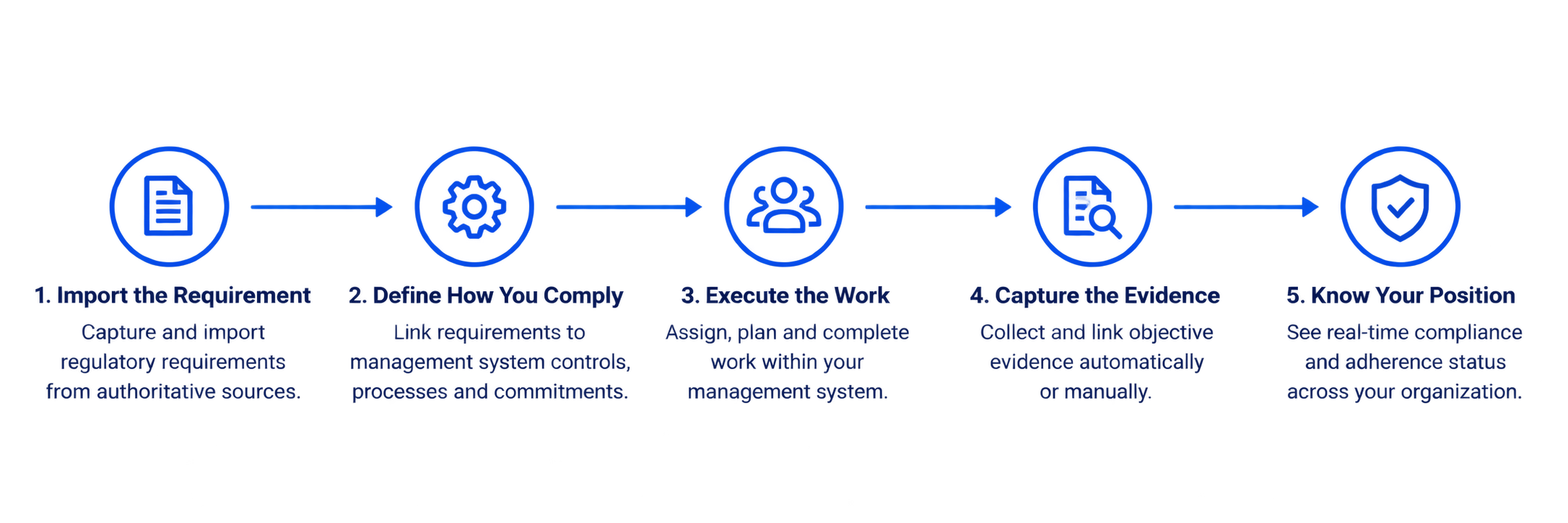
From Requirements to Work and Evidence.
Map requirements to your management system. Define responsibilities and work steps. Link completed evidence back to the step and requirement.
See the structure behind the work. Explore the Helio Atlas platform.
TRACEABLE WORK
Safer Operations, Cleaner Energy, a Brighter Tomorrow.

SEE THE BIGGER PICTURE
A Connected View
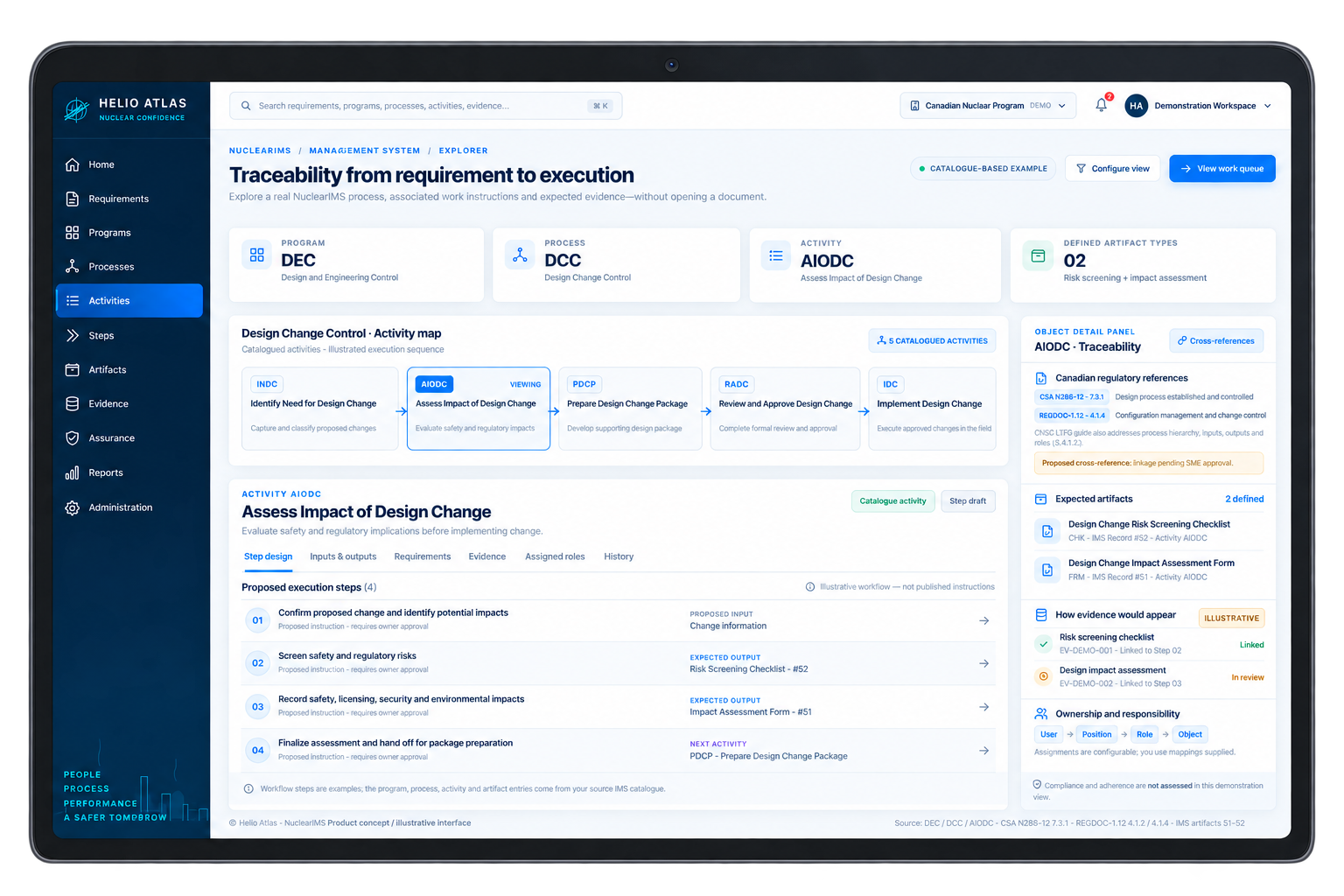
From Requirement to Reality.
Helio Atlas brings your requirements, controls, work and evidence together in a single, connected platform - so you can see status, identify gaps and take action with confidence.

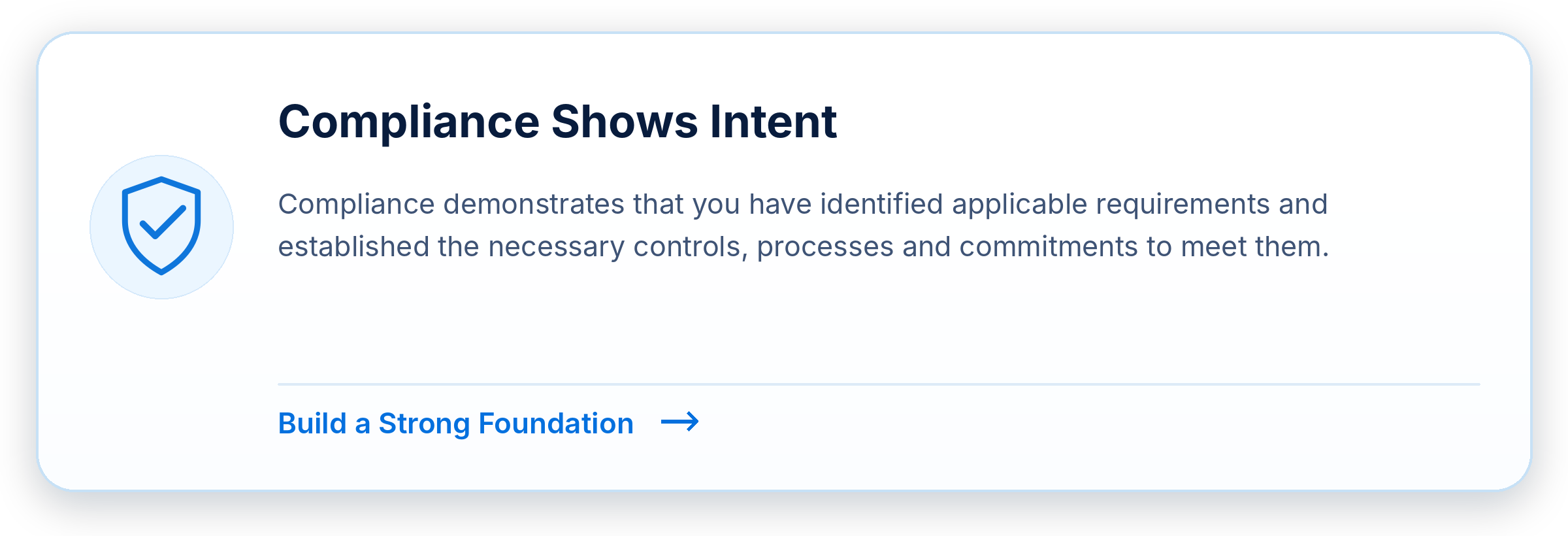
Compliance Shows Intent.
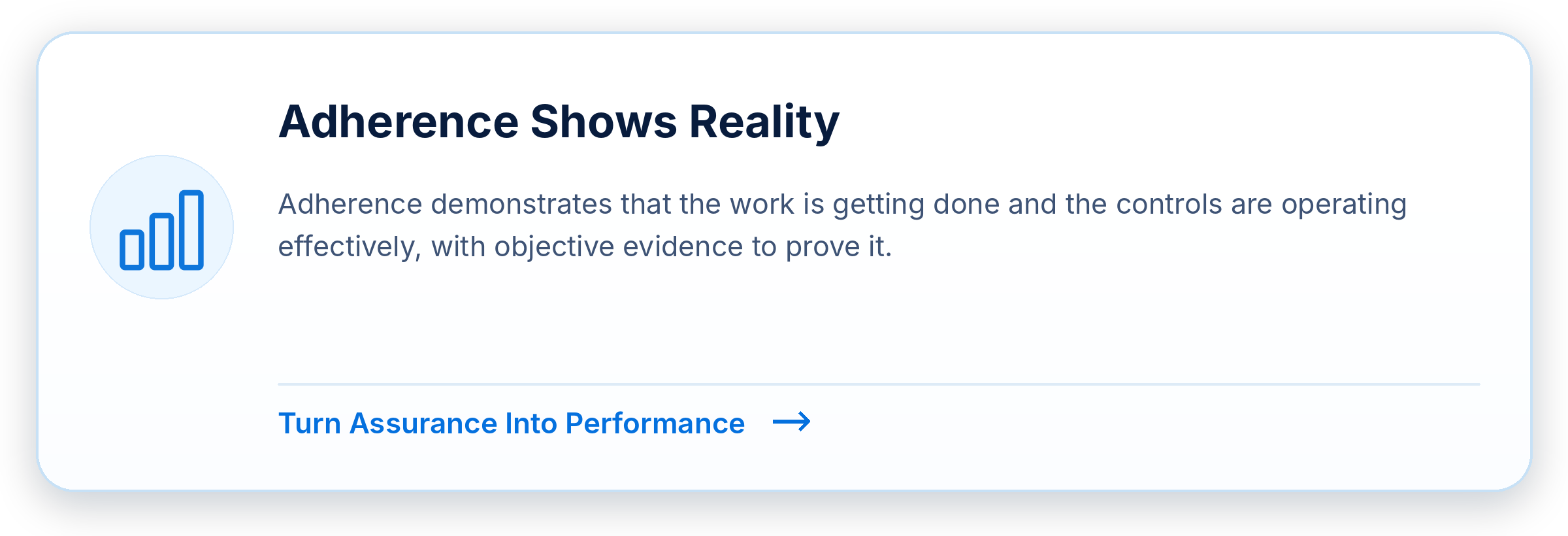
Adherence Shows Reality.
Helio Atlas helps you achieve both.
TWO PERSPECTIVES. ONE SYSTEM.
Compliance and Adherence Working Together.